

Table of Contents
- Premium Streetwear vs Fast Fashion: Side-by-Side Comparison
- Fabric Quality, Weight, and Feel: What Sets Them Apart
- How to Identify Quality Clothing Before You Buy
- Construction, Stitching, and Garment Durability
- Cost Per Wear Clothing: Calculating True Value
- Sustainable Streetwear and Ethical Production
- Oversized Streetwear Fit: Design Intention vs Trend Chasing
- Conclusion
- Frequently Asked Questions
Last Updated: October 5, 2026
Premium Streetwear vs Fast Fashion: Side-by-Side Comparison
The difference between premium streetwear fast fashion comes down to three things: how the garment is made, what it's made from, and how long it lasts. Premium streetwear versus fast fashion isn't just about price, it's about intention.
At Attitudz Apparel, we design heavyweight hoodies and oversized tees that prioritize fabric quality and construction durability. When we compare premium streetwear to fast fashion, the gap becomes clear in the details: the weight of the fabric, the precision of the stitching, the integrity of the seams.
Fast fashion brands prioritize speed and volume. They push new designs to market in weeks, not months. The trade-off is visible in the garment itself: thinner fabrics, weaker seams, prints that crack after a few wears. Premium streetwear takes the opposite approach. It assumes you'll wear the piece repeatedly, so every choice, from the fabric weight to the construction method, reflects that reality.
Here's what separates them in practice:
| Aspect | Premium Streetwear | Fast Fashion |
|---|---|---|
| Fabric Weight | 11.8-13.6 oz/yd² | 5-8 oz/yd² |
| Fabric Composition | 100% cotton or high-quality blends | Low-grade polyester, thin cotton |
| Stitching | Double-stitched seams, reinforced stress points | Single-stitched, minimal reinforcement |
| Print Durability | Durable | Cracks or fades after 10-15 washes |
| Design Cycle | Seasonal or timeless | Weekly or bi-weekly drops |
| Typical Lifespan | Long-lasting | 3-6 months of regular wear |
| Price Range | $60-$100+ | $15-$35 |
The choice between them isn't about snobbery. It's about understanding what you're actually buying.
Fabric Quality, Weight, and Feel: What Sets Them Apart
Premium streetwear uses heavier, denser fabrics that feel substantial in your hands. When you pick up a piece from Attitudz Apparel, like our No Weapon Heavyweight Sunfade Oversized Hoodie at 11.8 oz/yd², you immediately notice the difference. The fabric has body. It drapes differently. It doesn't cling or bunch awkwardly.

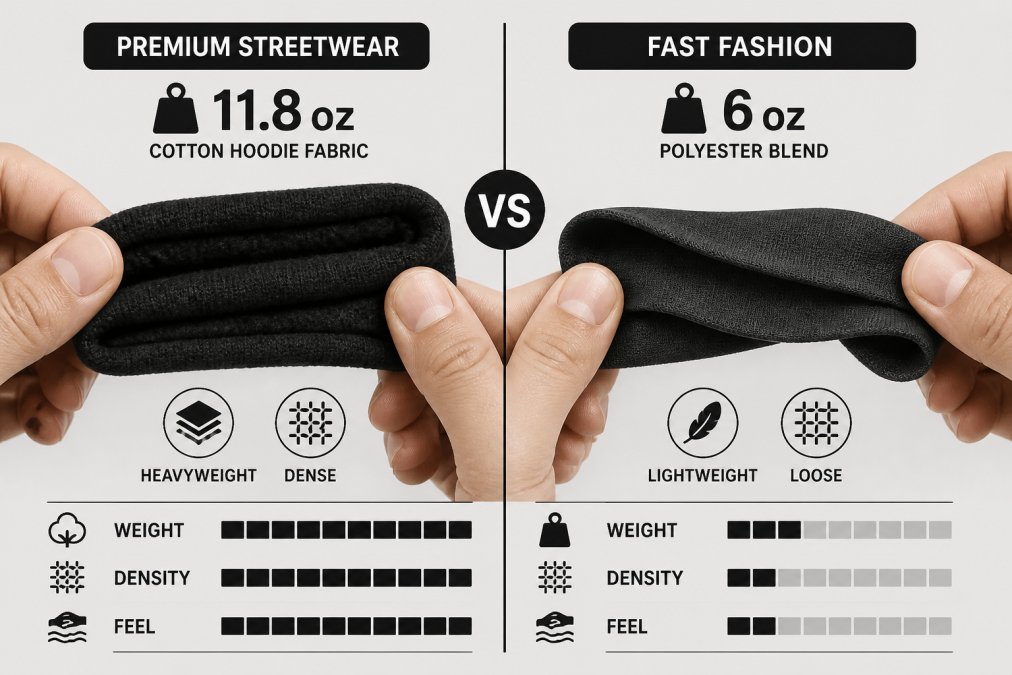
Fast fashion fabrics typically weigh 5-8 oz/yd². They're thin enough to feel flimsy. Over time, they pill (those little fuzzy balls that form on the surface), lose their shape, and develop permanent wrinkles. Premium fabrics resist these problems because the fiber density is higher, there's simply more material per square yard.
Material composition matters too. Premium streetwear favors 100% cotton or carefully engineered blends like the 85% cotton, 15% polyester mix used in our "Purpose" Oversize Heavyweight Fleece Hoodie. That blend gives you the breathability of cotton with the durability and stretch recovery of polyester. Fast fashion often cuts corners by using cheap polyester blends that feel plasticky, trap heat, and degrade faster.

Fabric feel is the first signal of quality. Run your hand across a premium piece and you'll sense the confidence in the material choice. Fast fashion feels thin and insubstantial because it is.
How to Identify Quality Clothing Before You Buy
Before committing to any piece, check these markers of garment quality.
Weight and density: Hold the garment. Does it feel substantial, or does it feel like it might blow away? Premium pieces have noticeable heft. Check the fabric weight in the product specifications, look for 11 oz/yd² or higher for hoodies and tees.
Seam construction: Turn the garment inside out. Look at the seams. Premium brands use double-stitching or reinforced stitching at stress points like shoulders, armpits, and hem lines. Fast fashion uses single-stitched seams that come apart faster. The stitching should be tight and even, not loose or wavy.
Print and graphic quality: Examine how the graphic or text is applied. Premium streetwear uses methods that bond the design to the fabric, screen printing, embroidery, or high-quality heat transfers. The design should feel smooth and durable. Fast fashion often uses cheap heat transfers that crack and peel within weeks.
Fabric composition: Read the label. 100% cotton or high-quality blends (85% cotton, 15% polyester) are signs of premium construction. Cheap polyester blends or mystery fabric compositions are red flags. The fabric should feel natural, not plastic-like.
Edge finishing: Look at the cuffs, collar, and hem. Are they finished cleanly with a rolled edge or binding? Or do they look raw and unfinished? Premium brands finish every edge with care. Fast fashion often leaves edges unfinished or uses cheap binding that unravels.
Care instructions: Premium pieces usually recommend gentle care (hand wash or machine wash on low). They're built to last if you treat them well. Fast fashion often comes with minimal care instructions because the garment won't survive aggressive washing anyway.
Construction, Stitching, and Garment Durability
Premium streetwear is built with durability as the core principle. Every stitch, every seam, every reinforcement is placed with the assumption that you'll wear this piece dozens of times.
Double-stitching is standard in premium construction. Instead of a single line of thread holding a seam together, there are two. This means the seam can withstand more stress, more washing, more movement. Stress points, where your arm meets your shoulder, where the sleeve meets the body, where the pocket is attached, get extra reinforcement.
Our "Built Different" Oversize Fleeced Hoodie uses a 42% cotton, 53% polyester blend with careful construction that supports repeated wear. The fabric weight (10.3 oz/yd²) combined with reinforced seams means the piece holds its shape and structural integrity.
Fast fashion uses single-stitching to save time and money. The seams are functional, they hold the garment together initially, but they're not built for longevity.
Durability also depends on how the garment is finished. Premium brands trim loose threads, finish seam edges, and ensure every detail is clean. Fast fashion often leaves rough edges, loose threads, and unfinished details that start to unravel immediately.
The difference compounds over time. A premium piece worn twice a week for two years will look nearly new.
Cost Per Wear Clothing: Calculating True Value
This is where premium streetwear fast fashion becomes a financial decision.
No Weapon Heavyweight Sunfade Oversized Hoodie →
Cost per wear is simple: divide the garment's price by the number of times you'll wear it before it's unwearable. A premium hoodie at $75 that lasts two years of twice-weekly wear (roughly 100 wears) costs $0.75 per wear.
The math flips when you account for replacement. Buy one premium hoodie at $75, and you've spent $75 while having a reliable piece for the full two years.
Our "Locked in" Fleeced Boxy Hoodie at $64 with an organic cotton blend and 430 g/m² fabric weight is designed for this kind of longevity. It's meant to be a staple, not a disposable piece.

Fast fashion relies on the psychological appeal of low upfront cost. The sticker price feels manageable. But the hidden cost is replacement. You'll buy more pieces because each one falls apart faster.
Sustainable Streetwear and Ethical Production
Premium streetwear and fast fashion differ fundamentally in their approach to environmental and labor impact.
Fast fashion's model depends on rapid production and high volume. Factories operate under pressure to deliver designs quickly and cheaply, which often means cutting corners on labor conditions, waste management, and environmental standards. The garments are designed to be disposable. This cycle creates massive textile waste.
Premium streetwear brands typically produce in smaller batches, which allows for better oversight of labor conditions and environmental practices. They're more likely to use sustainable materials, minimize waste, and maintain longer-term relationships with factories.
Attitudz Apparel focuses on heavyweight, durable pieces that reduce the need for frequent replacement.
When evaluating sustainable streetwear, look for transparency. Does the brand disclose where and how their garments are made? Do they use certified sustainable materials? Are they honest about their supply chain? Vague claims about "ethical production" without specifics are often marketing. Real commitment shows up in verifiable details.
Oversized Streetwear Fit: Design Intention vs Trend Chasing
Oversized fit has become ubiquitous in streetwear, but there's a difference between intentional oversized design and trend-chasing baggy cuts.
Premium streetwear brands approach oversized fit with purpose. They design the proportions to work with the garment's intended silhouette. The drop shoulder, the sleeve length, the body width, these are all calculated to create a specific visual and functional effect. An oversized piece should feel intentional, not like you're wearing someone else's clothes.
Our "Purpose" Oversize Heavyweight Fleece Hoodie is designed with specific measurements across multiple sizes (XS through 4XL) so the oversized fit works proportionally at every size. The chest sits at 22.83-30.31 inches depending on size, and the sleeve length is calibrated to match. This is intentional design.
Fast fashion brands chase trends without considering proportion. They make everything oversized because that's what's selling, regardless of whether it works for the garment or the wearer.
The difference shows up in how the piece wears. An intentionally oversized premium piece drapes well, moves with your body, and looks clean.
When shopping for oversized streetwear fit, check the specific measurements. Does the brand provide detailed sizing? Do the proportions make sense for your frame? A truly premium oversized piece will fit intentionally, not accidentally.
Conclusion
Premium streetwear versus fast fashion is ultimately a choice between durability and disposability. Premium pieces cost more upfront because they're built to last, heavier fabrics, reinforced seams, intentional design.
The financial case for premium streetwear is strong when you calculate cost per wear.
At Attitudz Apparel, we believe your everyday wardrobe should reflect your values and withstand repeated wear. Our faith-inspired hoodies and tees use premium heavyweight fabrics, careful construction, and designs that feel intentional rather than trendy. Whether you choose the No Weapon Heavyweight Sunfade Oversized Hoodie at 11.8 oz/yd² or the "Purpose" Oversize Heavyweight Fleece Hoodie with its 13.6 oz/yd² fabric, you're investing in a piece designed to last. Shop now and experience the difference that quality construction and premium materials make in how your clothes feel, fit, and endure.
Frequently Asked Questions
What is the main difference between premium streetwear and fast fashion?
Premium streetwear uses higher-quality fabrics (often 11-14 oz/yd² cotton or blends), stronger stitching, and intentional design that lasts multiple seasons. Fast fashion prioritizes speed and low cost, using lighter fabrics (typically 6-8 oz/yd²), minimal stitching, and designs meant to be worn briefly before disposal. Premium pieces maintain their shape, color, and comfort; fast fashion often shrinks, fades, or deteriorates.
Is premium streetwear worth the higher price?
Yes, when calculated by cost per wear. A $75 premium hoodie worn 100+ times costs $0.75 per wear. Premium streetwear's durability, fit consistency, and fabric quality mean you keep wearing it longer. The messaging and design also matter: faith-inspired pieces from brands like Attitudz Apparel are crafted to support your values, not just follow fleeting trends.
How can I tell if streetwear is actually premium quality?
Check fabric weight (premium is typically 11+ oz/yd² for hoodies), fiber content (100% cotton or high-quality blends like 85% cotton/15% polyester), and stitching (tight, even seams with no loose threads). Look at the hem and cuff construction. Read care instructions carefully. Brands like Attitudz Apparel list exact fabric weights and fiber percentages, showing transparency about what you're buying.
Does sustainable streetwear cost more than fast fashion?
Premium sustainable streetwear does cost more upfront, but less over time. When you buy fewer pieces that last longer and align with your values, you're investing in both personal integrity and long-term savings.
The real cost of fast fashion isn't the low price tag, it's the constant cycle of replacement. Premium streetwear breaks that cycle by delivering garments built for longevity. Attitudz Apparel combines premium heavyweight materials with faith-inspired design that empowers you to wear your values with confidence. Free shipping on all orders means your investment in quality starts the moment you click purchase.