

Table of Contents
- Streetwear vs Fast Fashion: A Quality Breakdown
- How to Spot High Quality Clothing
- Heavyweight Cotton Hoodies for Winter: Why Material Matters
- Cost Per Wear Calculation: Real Investment Value
- Durability, Fabric Integrity, and Garment Construction
- Environmental and Ethical Implications
- Which Option Is Right for You?
- Frequently Asked Questions
Last Updated: September 23, 2026
Streetwear vs Fast Fashion: A Quality Breakdown
When you're shopping for a hoodie, understanding streetwear vs fast fashion quality reveals that the choice feels simple on the surface. One costs more. The other fills your closet faster. But the real difference runs much deeper than price tags.
The gap between streetwear and fast fashion quality involves construction, material sourcing, design originality, and durability through repeated washing. Understanding this difference changes how you spend your money.
Streetwear prioritizes durability and premium materials; fast fashion prioritizes trend turnover and volume. The question is which aligns with how you actually wear your clothes and what you value.
How to Spot High Quality Clothing
High-quality garments share unmistakable markers. Understanding both tactile cues and technical specifications separates informed buyers from those relying on marketing language.
Tactile and Visual Inspection
Look for thick, even stitching with no loose threads. Seams should lie flat and feel reinforced. The fabric should feel substantial, dense, and tightly woven with no transparent areas when held to light.
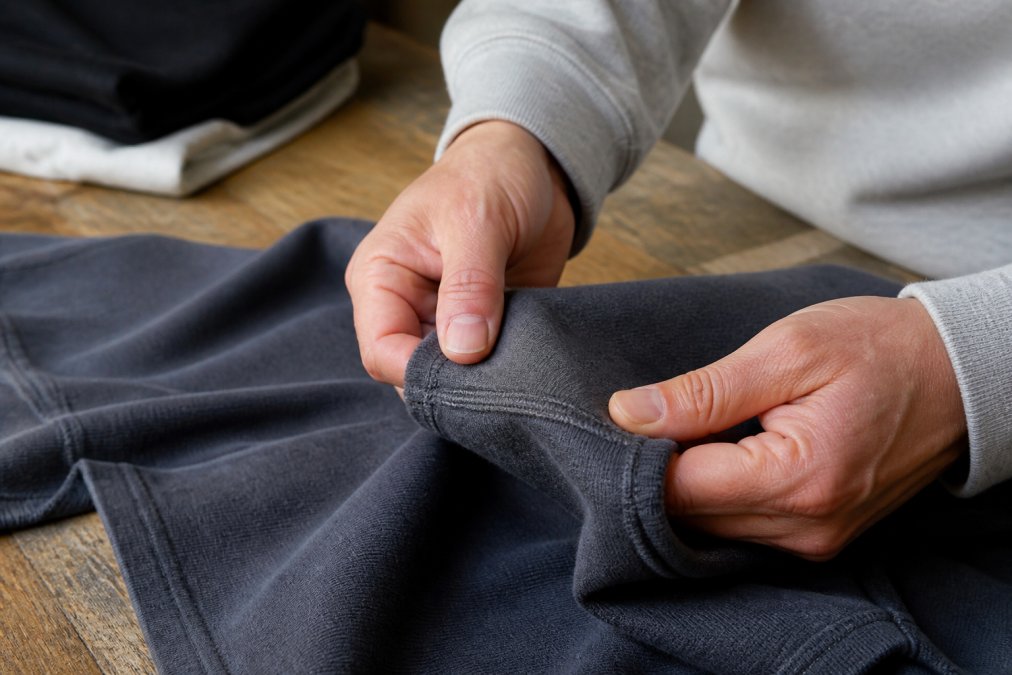
A true heavyweight hoodie has noticeable heft; fast fashion hoodies feel paper-thin. The fabric should have body and structure, not drape like a t-shirt.
Quality brands sew labels securely with multiple anchor points; cheap labels are glued or single-stitched and peel away. Examine cuffs, hems, and collar bands, quality garments finish these cleanly and don't cut corners on hidden parts.
Objective Technical Specifications
The most reliable indicator is fabric weight, measured in ounces per square yard (oz/yd²). Quality streetwear hoodies range from 11 to 14 oz/yd²; fast fashion rarely exceeds 7 oz/yd². This should appear in product specifications.
Thread count and yarn ply matter for durability. Higher thread count indicates a tighter weave that resists pilling. Look for multi-ply yarn construction rather than single-ply, which frays more easily. Quality brands list this in technical specs.
Fiber composition is critical. Cotton-dominant blends (80% or higher) outperform synthetic-heavy blends in breathability and durability. Polyester should serve a functional purpose, not cost-cutting. Avoid "polyester blend" without percentage breakdown.
Shrinkage and colorfastness reveal manufacturing quality. Quality brands pre-shrink fabric; fast fashion often doesn't, causing unpredictable size changes. Quality dyes bond securely; fast fashion dyes bleed or fade within 5-10 washes.
Seam construction can be verified by counting stitches per inch (SPI). Quality garments use 12-16 SPI; fast fashion drops to 8-10 SPI. Run your finger along a seam; you should feel individual, evenly spaced stitches.
Certifications as Quality Markers
Third-party certifications provide objective proof of material and manufacturing standards.
Resale Value as a Quality Indicator
Quality streetwear pieces retain 30-50% of original retail value on secondary markets; fast fashion retains only 5-10%. This reflects real durability and desirability.
Heavyweight Cotton Hoodies for Winter: Why Material Matters
Fabric weight directly impacts warmth, durability, and how long a garment stays looking new.
Heavyweight cotton (11-14 oz/yd²) provides insulation, resists pilling, maintains shape, and develops character over time. The "Purpose" Oversize Heavyweight Fleece Hoodie from Attitudz Apparel uses 85% cotton and 15% polyester at 13.6 oz/yd².

Fast fashion hoodies use lightweight synthetic blends (5-7 oz) that pill within weeks and lose shape quickly. The trade-off is garment longevity.
Natural fibers breathe better than synthetics. Blends with 80%+ cotton offer the best balance of performance and durability.
Cost Per Wear Calculation: Real Investment Value
A $75 heavyweight hoodie worn twice weekly for three years (312 wears) costs $0.24 per wear. A $25 fast fashion hoodie worn similarly for one year (100 wears) costs $0.25 per wear, and the quality piece still looks presentable after three years.
Over five years at twice weekly wear (520 wears), cost per wear drops to $0.14, while the fast fashion hoodie is in a landfill.
Heavy users see cost per wear drop to pennies for quality pieces. Occasional wearers might find fast fashion more rational if durability matters less than initial cost.
Durability, Fabric Integrity, and Garment Construction
Durability is engineered into design. Quality streetwear uses reinforced seams in high-stress areas (armholes, shoulders, sleeve attachments) with double-stitching or bar tacks that prevent splitting.
Tight weaves resist pilling better than loose ones. Quality cotton holds dye through repeated washing; poorly engineered synthetics develop fuzzing within months.
Quality brands fold and stitch hems cleanly, reinforce pocket openings, and use substantial thread. Fast fashion cuts corners with single-stitched hems and thin thread.
No Weapon Heavyweight Sunfade Oversized →
A quality hoodie maintains shape, color, and texture through dozens of cycles. Fast fashion pieces fade, shrink unpredictably, and wear within weeks.
Environmental and Ethical Implications
The real difference between streetwear and fast fashion lies in measurable supply chain practices, certifications, and end-of-life value.
The Fast Fashion Waste Problem
Fast fashion generates massive textile waste. Americans discard roughly 81 pounds of clothing per year. Textiles account for 10% of global carbon emissions and 92 million tons of annual waste, with synthetics taking 200+ years to decompose.
This waste is engineered. Fast fashion manufacturers intentionally use low-quality materials to encourage frequent replacement.
Streetwear's Longevity Advantage
A garment worn five years instead of one generates one-fifth the environmental impact per wear. A quality hoodie worn 520 times over five years has lower carbon footprint per wear than a fast fashion hoodie worn 100 times in one year.
Supply Chain Transparency and Certifications
Quality brands invest in ethical manufacturing and verifiable sourcing.
Manufacturing Location and Transparency
Quality brands manufacture in countries with stronger labor protections or third-party auditing and publish supply chain maps.
Chemical Use in Production
Fast fashion's rapid cycles require aggressive chemicals that contaminate water supplies.
Circular Fashion and Resale Value
A worn-out fast fashion hoodie has no resale value and cannot be repaired economically. Quality hoodies retain resale value on secondary markets, extending useful life by years.
Repairability matters equally. Quality construction means a torn seam can be stitched by a tailor. By designing for repairability, quality brands reduce waste and extend garment lifecycles.
The True Cost Calculation
Fast fashion's low price is misleading. A $25 hoodie that ends up in a landfill after one year has a true environmental cost (water use, chemical pollution, carbon emissions, waste) that far exceeds its retail price. A $75 quality hoodie worn for five years distributes that environmental cost across 260+ wears, making its per-wear impact lower than the cheap alternative.
Which Option Is Right for You?
The answer depends on three factors: your wear frequency, your budget constraints, and your values.
Choose streetwear if you wear pieces multiple times per week, care about how garments look after a year, value ethical manufacturing, or want clothing that reflects your identity and purpose. The upfront cost is higher, but cost per wear becomes competitive quickly. You're also investing in pieces that work harder in your wardrobe, versatile, durable staples that pair with everything.
Choose fast fashion if you wear pieces occasionally, follow trend cycles closely, or have a limited budget for your entire wardrobe. Fast fashion works for experimental pieces you're not sure about, seasonal items, or if your lifestyle changes frequently and you don't want to commit to lasting investments.
Most people benefit from a mixed approach. Build your core wardrobe with quality basics, hoodies, t-shirts, and foundational pieces you wear constantly. Use fast fashion for trend-driven items, accessories, and pieces you're testing before committing to a premium version.
Attitudz Apparel's lineup serves the core wardrobe approach. The "Purpose" Oversize Heavyweight Fleece Hoodie at $74.95 and the "No Weapon Heavyweight Sunfade Oversized Hoodie" at $73.90 are investment pieces designed for years of wear. They're priced higher than fast fashion alternatives, but the fabric integrity, garment construction, and design originality justify the cost if you wear them regularly.

| Factor | Streetwear | Fast Fashion | Winner For |
|---|---|---|---|
| Fabric Weight | 11-14 oz/yd² | 5-7 oz/yd² | Durability |
| Cost Per Wear (3+ years) | $0.10-0.25 | $0.25-0.50 | Quality users |
| Trend Cycles | Slow, timeless | Rapid, seasonal | Values-driven buyers |
| Resale Value | 30-50% retention | 5-10% retention | Long-term thinkers |
| Environmental Impact | Lower over time | Higher per wear | Sustainability-focused |
| Initial Cost | $50-100+ | $15-30 | Budget-constrained |
The streetwear vs fast fashion quality comparison ultimately reflects different philosophies about consumption. Fast fashion optimizes for access and trend participation.
Frequently Asked Questions
What are the primary differences in fabric weight between streetwear and fast fashion?
Streetwear typically uses heavier fabrics measured in ounces per square yard (oz/yd²). Premium heavyweight hoodies range from 11.8 to 13.6 oz/yd², while fast fashion often uses 6-8 oz/yd² fabrics. The heavier the fabric, the more durable it becomes. This density creates better shape retention, increased warmth, and longer garment lifespan. Lightweight fabrics pill, thin out, and lose structure after repeated washing.
How does garment construction affect the lifespan of a hoodie?
Quality construction determines how long a hoodie survives washing and wear. Look for reinforced seams, double-stitched hems, and secure pocket attachment. Streetwear brands invest in proper garment construction techniques that prevent seam failure and fabric separation. Fast fashion typically uses single-stitch methods to reduce production costs, causing seams to split and hems to unravel within months of regular use.
Is premium streetwear a better long-term investment than fast fashion?
Yes, when measured by cost per wear. A $74.95 heavyweight fleece hoodie worn 2-3 times weekly for three years costs roughly $0.10 per wear. A $25 fast fashion hoodie that lasts six months costs $0.35+ per wear. Premium streetwear maintains shape, color, and structural integrity through dozens of wash cycles, while fast fashion pieces degrade rapidly. The initial price difference disappears when you calculate actual durability.
What specific indicators should you look for to identify high-quality streetwear?
Check fabric weight on the label, quality pieces state weight in oz/yd² or g/m². Examine stitching by turning the garment inside out; seams should be straight and tight. Feel the fabric; premium options feel substantial and structured, not thin or flimsy. Look for reinforced stress points like armholes and pocket seams. Read care instructions.