

Table of Contents
- What Defines a Heavyweight Oversized Tee
- Understanding Heavyweight Tee Fabric Weight and Composition
- How to Layer Oversized T-Shirts for Maximum Versatility
- Oversized Tee Fit Guide: Finding Your True Size
- Best Heavyweight T-Shirts for Durability and Longevity
- Synthetic and Non-Cotton Alternatives for Specific Needs
- Common Mistakes When Buying Heavyweight Oversized Tees
- Frequently Asked Questions
Last Updated: October 8, 2026
What Defines a Heavyweight Oversized Tee
A heavyweight oversized tee is a premium cotton garment engineered for durability, comfort, and versatile styling. The defining characteristics center on three factors: fabric weight, fit profile, and construction quality.

Fabric weight is measured in GSM (grams per square meter) or ounces per yard. A true heavyweight tee starts at 6.5 oz/yd² and typically reaches 8.5-10 oz/yd² for maximum durability.
The oversized silhouette means the garment sits intentionally loose through the chest, shoulders, and torso. This isn't a boxy fit, it's a deliberate drop shoulder construction that creates negative space for layering while maintaining a refined aesthetic.
At Attitudz Apparel, we've built our oversized tees with this precision in mind. The Resist Mentality Unisex Oversized Tee exemplifies the standard: 100% cotton at 8.8 oz/yd², a moderate fabric thickness, and a true oversized fit that works across body types without looking shapeless.
Construction quality separates premium heavyweight tees from mass-produced alternatives. Double-stitched seams, reinforced necklines, and proper hem finishing prevent unraveling and ensure the garment survives hundreds of wash cycles.
Understanding Heavyweight Tee Fabric Weight and Composition
Fabric weight determines how a tee performs in real-world conditions. A 5 oz garment feels paper-thin and degrades quickly. A 6.5 oz tee offers basic durability. But an 8-10 oz heavyweight cotton tee is built to last years, not seasons.
GSM (grams per square meter) translates directly to longevity. Higher GSM means more fiber density per unit area. This density creates natural resistance to pilling, fading, and structural breakdown.
Cotton composition varies widely. Single-ply cotton breaks down faster than double-ply. Combed cotton has impurities removed, extending garment life. Ring-spun cotton creates a smoother, softer surface.
The difference shows up in practice. A lightweight tee may feel softer initially but becomes thin and translucent after five washes.
Synthetic blends (cotton-polyester, cotton-elastane) offer moisture-wicking properties that pure cotton cannot match. Polyester adds durability but reduces breathability slightly. Elastane (spandex) improves stretch and fit recovery but can yellow over time if exposed to direct sunlight.
How to Layer Oversized T-Shirts for Maximum Versatility
Layering with an oversized tee requires understanding how the fit profile interacts with other garments. The key principle: the oversized fit must remain visible and intentional, not buried under other pieces.
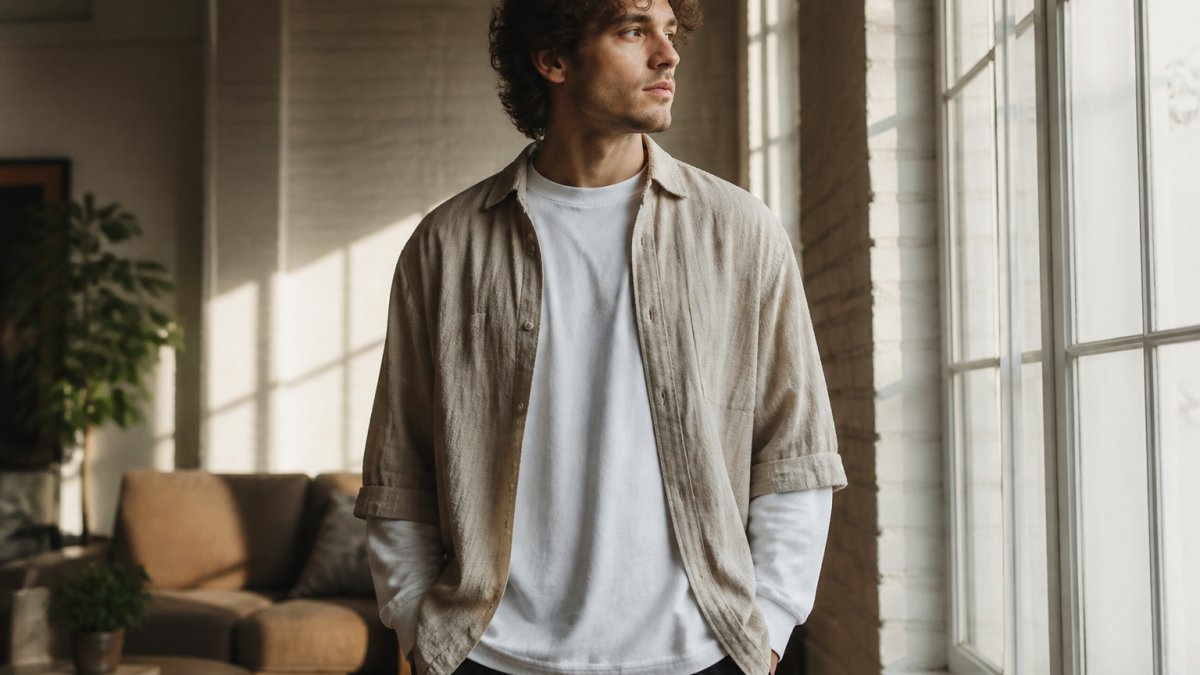
Start with the tee as your base layer. The 8.8 oz weight provides enough structure to hold its shape under additional layers without bunching or creating bulk.
Next, add a mid-layer. This could be an open button-up shirt, a lightweight cardigan, or an unbuttoned overshirt. The oversized tee should peek through at the neckline, cuffs, and hem.
Finally, add outerwear if needed. A denim jacket, bomber, or oversized coach jacket works over the layered base. The heavyweight tee's structured fabric prevents the entire stack from looking sloppy.
The mistake most people make is choosing a tee that's too fitted. A standard-fit tee disappears under layers. An oversized heavyweight tee remains visible and intentional, creating a cohesive streetwear aesthetic.
Layering for Seasonal Transitions
Spring and fall demand flexible layering. A heavyweight oversized tee works as your base year-round because it doesn't overheat in mild weather but provides enough substance to layer under lighter jackets.
In spring, pair the tee with an unstructured overshirt and sneakers. The breathability of 100% cotton prevents overheating. In fall, add a knit sweater over the tee, then a lightweight jacket on top. The tee's weight prevents sagging as temperatures drop.
Summer layering is minimal, the oversized tee alone with shorts or lightweight pants. Winter demands the full stack: base tee, mid-layer sweater or fleece, and insulated outerwear. The heavyweight tee's density ensures it doesn't compress under heavier pieces, maintaining the intentional oversized silhouette.
Building a Minimalist Base Layer Foundation
A minimalist wardrobe needs versatile anchors. One heavyweight oversized tee in a neutral color (black, white, gray, or cream) becomes the foundation for dozens of outfits.
This single piece layers under everything. It works as a standalone tee in warm weather. It pairs with a button-up for elevated casual. It disappears under sweaters and jackets for structured layering. The 8.8 oz weight ensures it performs equally well in all contexts without degrading.
Invest in quality here. A premium heavyweight oversized tee costs more upfront but outlasts five cheap alternatives. After two years of regular wear, a quality tee looks better than a new discount version because the fabric has softened and the color has aged gracefully rather than faded.
Oversized Tee Fit Guide: Finding Your True Size
Sizing an oversized tee requires understanding the difference between the garment's actual dimensions and how it will fit your body.
Check the chest measurement, not the label size. A medium oversized tee might have a 22-inch chest width. Measure your actual chest and add 4-6 inches for the intended oversized fit. If your chest is 38 inches, a 22-inch chest width will be too tight.
Sleeve length matters equally. Oversized sleeves should end at your wrist bone or just above it, not cover your hand. A drop shoulder construction means the sleeve seam sits further back on your shoulder, creating visual space.
Length is the final consideration. An oversized tee should hit mid-hip, not mid-thigh. Too long and it looks like you're wearing a dress. Too short and the oversized fit reads as sloppy rather than intentional. Most people need one size up from their standard fit to achieve proper oversized proportions.
Fit Profile Differences: Boxy vs. Drop Shoulder
A boxy fit has a straight silhouette from armpit to hem with minimal shaping. The shoulder seam sits directly on your shoulder joint. This creates a blocky, uniform appearance that can look unflattering on many body types.
A drop shoulder construction moves the shoulder seam 1-2 inches down the arm. This creates visual space, elongates the torso, and works across different shoulder widths. The sleeve sits further back, creating a more refined oversized aesthetic.
Drop shoulder is the modern standard for heavyweight oversized tees because it flatters more body types and photographs better. The slight angle creates dimension rather than flatness.
Best Heavyweight T-Shirts for Durability and Longevity
Durability in a heavyweight oversized tee comes down to three factors: fabric quality, construction methods, and fiber composition.
Resist Mentality – Unisex Oversized Tee →
Look for garments made from combed or ring-spun cotton. These processes remove impurities and create stronger individual fibers. A 100% cotton heavyweight tee built this way will outlast a cotton-polyester blend because the fibers remain consistent through repeated washing.
GSM matters directly. An 8.8 oz/yd² tee will outlast a 6.5 oz alternative by years, not months. The extra fiber density prevents the structural breakdown that causes thinning and pilling.
The Resist Mentality Oversized Tee from Attitudz Apparel delivers on durability through its 8.8 oz/yd² weight and 100% cotton construction. This weight class resists pilling, maintains shape, and develops a softer hand-feel with age rather than degrading.
Stitching Quality and Shrinkage Resistance
Examine the seams before purchasing. Double-stitched seams on the shoulders, sides, and armholes prevent unraveling. A single-stitched seam will eventually fray and fail. Double stitching adds cost but extends garment life by years.
The neckline construction reveals quality. A reinforced neckline with a tape binding prevents stretching and warping. Without this reinforcement, the neck hole will distort after a dozen washes.
Shrinkage resistance depends on pre-treatment. Quality manufacturers preshrink fabric before cutting and sewing. This prevents surprise shrinkage after the first wash. A 100% cotton heavyweight tee should shrink less than 3% when washed in warm water and dried on medium heat.
Ring-spun and combed cotton resist shrinkage better than standard cotton because the fiber structure is more uniform. Compacted cotton resists shrinkage even further through mechanical compression during manufacturing.
Care and Maintenance for Premium Cotton
Proper care extends the life of a heavyweight oversized tee significantly. Wash in cold water to prevent color fading and minimize shrinkage. Use a gentle detergent designed for cotton. Avoid fabric softeners, which coat fibers and reduce breathability.
Dry on low heat or hang-dry for maximum longevity. High heat accelerates fiber breakdown and can cause yellowing. A heavyweight tee dried on low heat will last twice as long as one dried on high.
Fold rather than hang to prevent shoulder stretching over time. The weight of a heavyweight tee can distort hangers. Store in a cool, dry place away from direct sunlight to prevent fading.
Turn the tee inside-out before washing to reduce pilling on the surface. This simple step protects the outer finish while allowing the garment to still get clean.
Synthetic and Non-Cotton Alternatives for Specific Needs
Pure cotton dominates the heavyweight oversized tee market, but alternatives exist for specific use cases.
Cotton-polyester blends (typically 80/20 or 85/15) add durability and reduce wrinkles. Polyester resists pilling better than pure cotton and maintains color longer. The trade-off: slightly reduced breathability and a different hand-feel.
Cotton-elastane blends (usually 95/5 or 98/2) add stretch and improve fit recovery. The tee maintains its shape better through movement and washing.
Synthetic alternatives like 100% polyester or polyester-nylon blends offer maximum durability and moisture-wicking. They dry faster and resist shrinkage completely. The downside: they don't breathe as well as cotton and can feel plasticky.
Rayon blends offer a softer hand-feel than pure cotton but less durability. They drape better and feel luxurious initially but break down faster with regular washing. Avoid rayon if longevity is your priority.
For most people, 100% cotton remains the best choice. The natural fiber breathes, ages gracefully, and delivers the aesthetic and comfort that heavyweight oversized tees are designed to provide.
Common Mistakes When Buying Heavyweight Oversized Tees
The first mistake is confusing oversized with plus-size. An oversized fit is intentional negative space. A plus-size garment is sized up for larger bodies. These are different.
The second mistake is ignoring GSM. A tee labeled "heavyweight" might be 6.5 oz/yd². That's entry-level heavyweight, not premium. True heavyweight starts at 8 oz and goes up.
The third mistake is buying without checking sleeve length. Oversized sleeves should end at your wrist bone. Too-long sleeves look sloppy. Too-short sleeves ruin the oversized aesthetic.
The fourth mistake is choosing the wrong color for your use case. Black shows every speck of dust. White yellows quickly without careful washing.
The fifth mistake is assuming all 100% cotton is equal. Combed cotton, ring-spun cotton, and compacted cotton all perform differently.
The sixth mistake is washing in hot water or drying on high heat. This accelerates fiber breakdown and causes premature fading.
The seventh mistake is buying a tee that's too expensive if you don't actually layer.
Finding the right heavyweight oversized tee requires balancing fabric weight, fit profile, and construction quality. The Resist Mentality Oversized Tee combines 8.8 oz premium cotton with true oversized proportions, making it a reliable anchor for any wardrobe.
Frequently Asked Questions
What fabric weight makes a heavyweight oversized tee suitable for layering?
A heavyweight oversized tee typically weighs between 280-320 GSM (grams per square meter). This density provides structure and durability while remaining breathable enough to wear under jackets or hoodies without excess bulk. The Resist Mentality tee, for example, features 300 GSM fabric weight, making it ideal for layering. Lighter tees (under 200 GSM) compress too much under outerwear, while heavier fabrics can feel stiff and limit your range of motion.
How should an oversized T-shirt fit when worn as a layering piece?
An oversized tee for layering should sit 1-2 inches beyond your natural shoulder line and have enough length to cover your hips without bunching at the waist. When layered under a jacket, the tee's sleeve should end at your wrist without puckering. The chest should feel roomy but not drowning, allowing you to move freely. Drop shoulder construction works best for layering because it doesn't create bulk at the arm seam, maintaining a clean silhouette under outerwear.
Are heavyweight oversized T-shirts prone to shrinkage?
Quality heavyweight tees made from compacted or pre-shrunk cotton resist significant shrinkage when cared for properly. However, hot water and high-heat dryers can cause shrinkage, which is why sizing guides matter. Before committing to a full wardrobe, test one tee with your actual care routine to understand how it behaves.
Can I layer oversized tees in warm weather, or are they only for cold seasons?
Heavyweight oversized tees work year-round if you choose the right fabric composition. In warm weather, look for tees with natural breathability from cotton or cotton-blend fabrics that allow moisture-wicking. In cooler months, the same tee becomes a mid-layer under jackets or fleece pullovers. The oversized silhouette creates air gaps that regulate temperature, making it versatile for seasonal transitions. Avoid synthetic blends if breathability is your priority during summer layering.