

Table of Contents
- Why Heavyweight Cotton Requires Special Care
- How to Prevent Hoodie Shrinkage Before Washing
- Step-by-Step: How to Wash Heavyweight Cotton Hoodies
- Air Drying vs Machine Drying Hoodies
- How Often Should You Wash a Hoodie
- Keeping Your Hoodie Soft and Maintaining Its Shape
- Fixing Shrinkage and Common Mistakes
- Frequently Asked Questions
Last Updated: September 29, 2026
Why Heavyweight Cotton Requires Special Care
Heavyweight cotton hoodies aren't like your everyday t-shirts. The dense fabric, typically 11.8 ounces per yard or heavier, holds moisture differently and responds to heat in ways that can permanently damage the garment if you're not careful. At Attitudz Apparel, we craft our heavyweight hoodies to last, which means understanding how to wash heavyweight cotton hoodies properly is essential to protecting your investment.

Thicker cotton fibers take longer to dry and endure more stress during washing.
How to Prevent Hoodie Shrinkage Before Washing
Shrinkage occurs when cotton fibers contract under heat and agitation, mostly in the first wash. Prevention starts before water touches your hoodie.
Check the Care Label and Fabric Weight
Your care label is the manufacturer's tested recommendation. For heavyweight cotton hoodies, it typically specifies a gentle cycle at 30°C (86°F), significantly cooler than standard warm water washing.
Turn Your Hoodie Inside Out
Turning your hoodie inside out cuts shrinkage risk dramatically by protecting the outer surface from direct agitation and color fading. The inside experiences less friction, keeping printed or embroidered designs protected. Make this a habit before the garment enters the laundry basket.
Step-by-Step: How to Wash Heavyweight Cotton Hoodies
The washing process itself determines whether your hoodie shrinks, loses softness, or maintains its shape. Follow these steps in order.
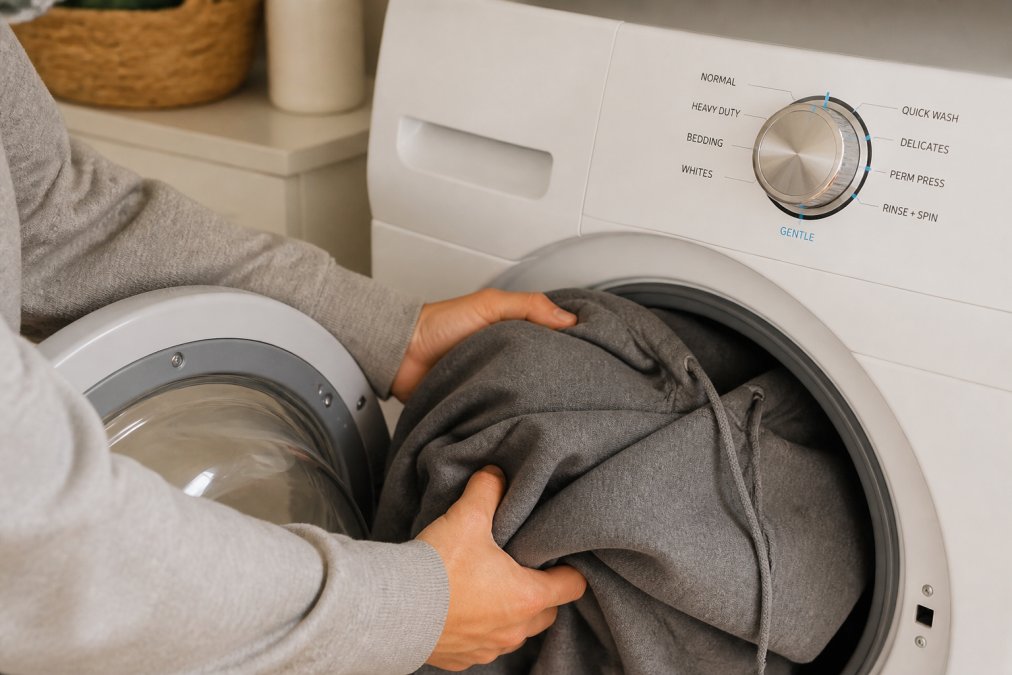
Select Cold Water and a Gentle Cycle
Set your machine to cold water, not cool or lukewarm, to minimize fiber contraction and reduce dye bleeding. Use a gentle cycle, which reduces agitation and spin speed. If unavailable, select "delicate" or "hand wash" mode.
Choose a Mild Detergent
Use mild detergents labeled "gentle" or "for delicates." Avoid bleach, heavy-duty detergents, fabric softeners, and optical brighteners. Use less detergent than normal, the dense fabric holds it longer, and excess residue causes stiffness.
Manage Spin Speed
Set spin speed to low or medium-low. High-speed spinning warps seams and causes minor shrinkage. If your machine offers a "no spin" option, use it.

Air Drying vs Machine Drying Hoodies
How you dry your hoodie matters as much as how you wash it. Heavyweight cotton presents unique drying challenges because the dense fabric holds moisture longer and the garment's weight can distort its shape if not supported properly during the drying process.
The Science of Heavyweight Cotton Drying
Heavyweight cotton dries slower because water penetrates deeper into tightly woven fibers. If unsupported while wet, gravity and moisture weight can permanently stretch seams and warp the hood. Weight distribution is critical, a heavyweight hoodie's mass becomes a risk factor.
Air Drying: The Optimal Method
Air drying is the gold standard for heavyweight cotton hoodies because it eliminates heat-related shrinkage entirely and allows you to control how the garment's weight is supported.
Proper hang-drying technique:
Preventing shoulder bumps and stretching:
Machine Drying: When Necessary and How to Minimize Damage
If machine drying is necessary, use the lowest heat setting ("delicate dry" or "low heat"). Run for 20-30 minutes maximum and remove while slightly damp. Finish drying flat or hanging in a well-ventilated space. Never use medium or high heat, and never run a full cycle, cumulative heat causes gradual shrinkage.
Comparing Drying Methods: Time vs. Risk
Air drying takes 24-72 hours but carries zero risk of heat-related shrinkage and preserves fabric softness. Machine drying on low heat takes 30-60 minutes but introduces a small but real risk of shrinkage and fiber stress. For a premium heavyweight hoodie, the extra time investment in air drying is worth the protection.
How Often Should You Wash a Hoodie
Wash your hoodie every 4-6 wears if worn multiple times weekly, or every 2-3 weeks if worn once or twice weekly. Between washes, air it out in a well-ventilated space to eliminate odors naturally. Spot-clean visible stains with a damp cloth and mild soap instead of washing the entire hoodie.
No Weapon Heavyweight Sunfade Oversized →
Keeping Your Hoodie Soft and Maintaining Its Shape
Softness and shape are what separate a premium heavyweight hoodie from a cheap alternative. Both require specific care practices.
Avoid Fabric Softener and Bleach
Avoid fabric softeners, they coat fibers and accumulate, making hoodies feel waxy. Never use bleach or oxygen-based whiteners; they break down cotton fibers. If your hoodie feels stiff after washing, run an extra rinse cycle to remove detergent residue.
Proper Storage Practices
Fold and store on a shelf rather than hanging long-term, which stretches shoulders. Use cedar blocks or lavender sachets instead of mothballs. Keep hoodies in a cool, dry place away from direct sunlight. If hanging short-term, use a padded hanger.
Fixing Shrinkage and Common Mistakes
Shrinkage and other fabric damage happen even to careful people. Understanding what went wrong and whether it can be fixed separates a salvageable mistake from permanent loss. This section covers troubleshooting common post-wash problems and rescue techniques for minor damage.
Assessing Shrinkage Severity
Measure chest width (armpit to armpit) and length (shoulder to hem) and compare to original dimensions. Minor shrinkage (less than 0.5 inches) may not require intervention. Moderate shrinkage (0.5-1.5 inches) can often be partially reversed using the conditioner soak method. Severe shrinkage (more than 1.5 inches) is usually permanent.
Reversing Minor to Moderate Shrinkage
A conditioner soak can relax fibers and restore some lost dimensions, best done immediately after shrinkage. Fill a basin with lukewarm water (85-90°F) and add 2-3 tablespoons of gentle hair conditioner. Submerge the hoodie for 20-30 minutes without agitating. Gently squeeze out excess water, lay flat on a towel, and stretch back toward original dimensions with gentle, sustained pressure.
Addressing Other Post-Wash Problems
Shrinkage is not the only problem that can occur. Other common issues have different causes and solutions.
Stiffness or scratchy texture:
Color fading or uneven drying:
Pilling or fuzzing:
Loss of softness:
- Detergent residue (solution: extra rinse cycles)
- Fabric softener buildup (solution: vinegar rinse, add 1/2 cup white vinegar to the rinse cycle to dissolve buildup)
- Hard water mineral deposits (solution: water softener or vinegar rinse)
- Excessive washing (solution: wash less frequently)
- High-heat drying (solution: air dry only)
Common Mistakes to Avoid
Each of these mistakes compounds over time. A hoodie subjected to all of them might last a year. The same hoodie cared for properly can last 5-10 years.
- Washing in warm or hot water on the first wear: This causes immediate shrinkage that sets the fibers. Always use cold water.
- Using standard or heavy wash cycles: These subject the fabric to excessive agitation. Always use gentle or delicate cycles.
- Drying in a machine on high or medium heat: Heat causes permanent shrinkage. Air dry or use low heat only.
- Washing with regular laundry detergent: Heavy-duty detergents strip oils and leave residue. Use mild detergent only.
- Using fabric softener: This coats fibers and accumulates over time, making the hoodie feel waxy and uncomfortable.
- Hanging wet hoodies by the hood alone: This stretches the hood seam and neckline. Always hang by the shoulders on a padded hanger.
- Storing in humid environments: Humidity promotes mildew and slows drying. Store in cool, dry spaces.
- Washing too frequently: Frequent washing accelerates wear. Wash every 4-6 wears instead.
When Damage Is Permanent
Severe shrinkage (more than 1.5 inches), high-heat damage, and bleach damage are usually permanent. If your hoodie has experienced one of these, the fibers have contracted or broken down beyond recovery. In these cases, the hoodie is unlikely to be salvageable.
Frequently Asked Questions
Do 100% cotton hoodies shrink in the dryer?
Yes, 100% cotton hoodies can shrink significantly in the dryer, especially at high temperatures. Heavyweight cotton fabrics like those in Attitudz Apparel's hoodies are prone to shrinkage because cotton fibers contract when exposed to heat. Machine drying at high temperatures can cause permanent shrinkage. Air drying is the safest method, though tumble dry low with dryer balls can minimize shrinkage if you must use a dryer.
How to prevent hoodie shrinkage when washing heavyweight cotton?
Prevent shrinkage by using cold water, selecting a gentle cycle, and turning your hoodie inside out before washing. Cold water and reduced agitation preserve fiber integrity better than hot or warm water. After washing, air dry your hoodie flat or on a hanger rather than tumble drying. If you must use a dryer, use low heat and remove the hoodie while slightly damp to minimize shrinkage risk.
How often should you wash a hoodie?
Most hoodies need washing only every 3-5 wears, depending on how much you sweat and what activities you do in them. Washing less frequently extends garment longevity and reduces wear on cotton fibers. Spot-clean stains immediately to avoid the need for full washes. If your hoodie smells fresh and shows no visible stains, you can wear it multiple times before washing. This approach maintains softness and prevents unnecessary fiber damage.
What water temperature is best for washing heavyweight cotton?
Cold water (around 30°C or 86°F) is best for washing heavyweight cotton hoodies. Cold water prevents color bleeding, reduces shrinkage risk, and is gentler on cotton fibers than lukewarm or hot water. Most care labels on premium hoodies specify cold water washing for this reason. Cold water also uses less energy and helps preserve the vibrancy of any prints or dyes on your hoodie.